Reducing Attendance Disputes: Make the Rules Unambiguous
Most attendance arguments come from fuzzy rules. Here is how to write them down, measure them consistently, and settle disputes before they start.
Most attendance disputes are not about people trying to game the system. They are about rules that were never written down clearly. When "on time" lives in someone's head instead of on a settings page, two reasonable people can disagree in good faith, and every conversation turns into a negotiation.
The fix is not stricter enforcement. It is clarity: agree the rules once, measure everyone against the same clock, and keep an automatic record so nobody argues from memory. Here is how the common flashpoints happen, and how to remove the ambiguity behind each one.
"How late is actually late?"
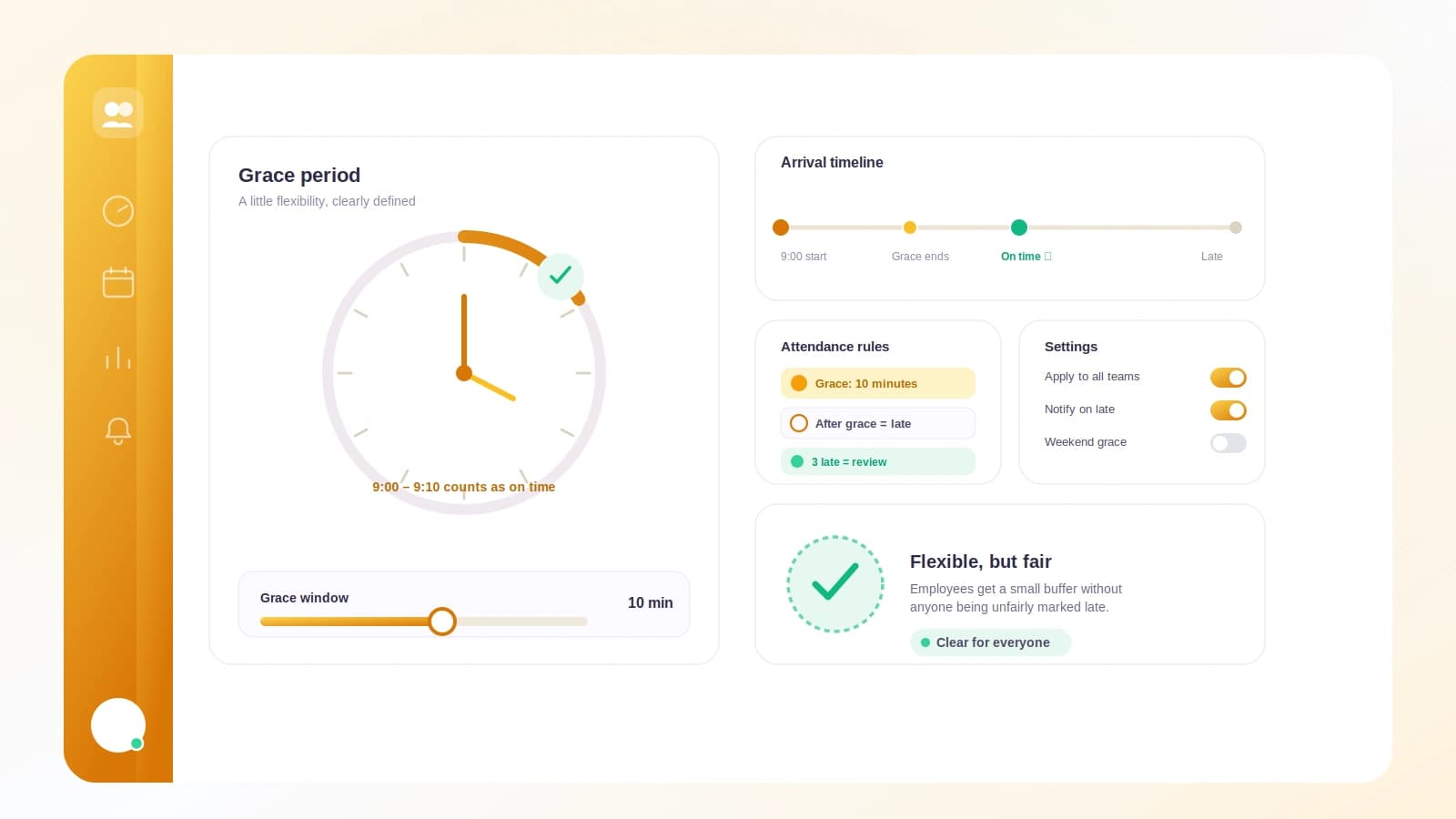
Ambiguity: your schedule says work starts at 9:00, but in practice a few minutes never mattered, until one day it did. Now people disagree about where the line sits, and that disagreement feels personal.
Remove it by publishing a number. In Tickin, set your office hours (start and end) under Settings, then decide on a grace period. Grace is off by default, and you can allow a late arrival of 0, 5, 10, 15, 20, 30, 45, or 60 minutes (the default is 15). A clock-in after start plus grace counts as late, full stop. Once "start plus grace" is written down, "how late is late?" stops being an opinion and becomes a fact everyone agreed to in advance.
"Your 9am isn't my 9am"
Ambiguity: when people work from different cities, a single stated start time can mean several different real moments. Someone clocks in believing they are on time; someone else reads the record and sees a late arrival.
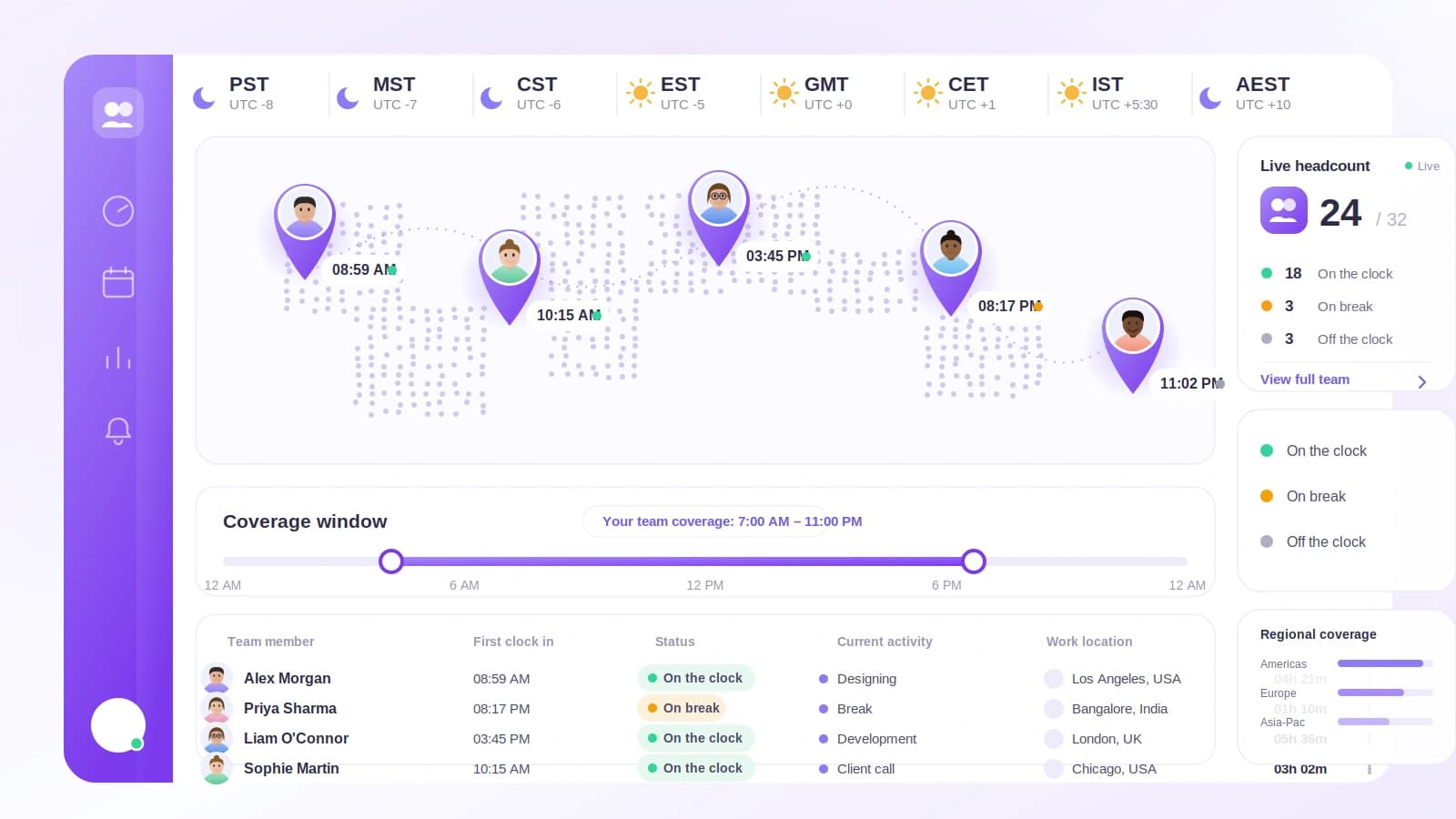
Remove it with one workspace timezone. Tickin judges every clock-in against the same clock, and it stays correct across daylight saving changes automatically. There is no "which timezone were you counting?" because there is only one, and it is the same for everyone.
"I got flagged on my day off"
Ambiguity: nothing erodes trust faster than a late-arrival notice on a public holiday or a scheduled non-working day. It makes the whole system look careless, and people start ignoring the alerts that do matter.
Remove it by configuring working days per tenant. Tickin skips public holidays and non-working days, so:
- Nobody is flagged on a day they were never expected to work.
- Late-arrival alerts (Slack or Microsoft Teams) fire only on real working days.
- Each employee gets at most one alert per working day, so there is no duplicate spam.
- Every alert is timezone-correct, matching the same clock the rules are written against.
When alerts only appear when they should, people trust them, and a trusted alert rarely becomes a dispute.
"That's not how I remember it"
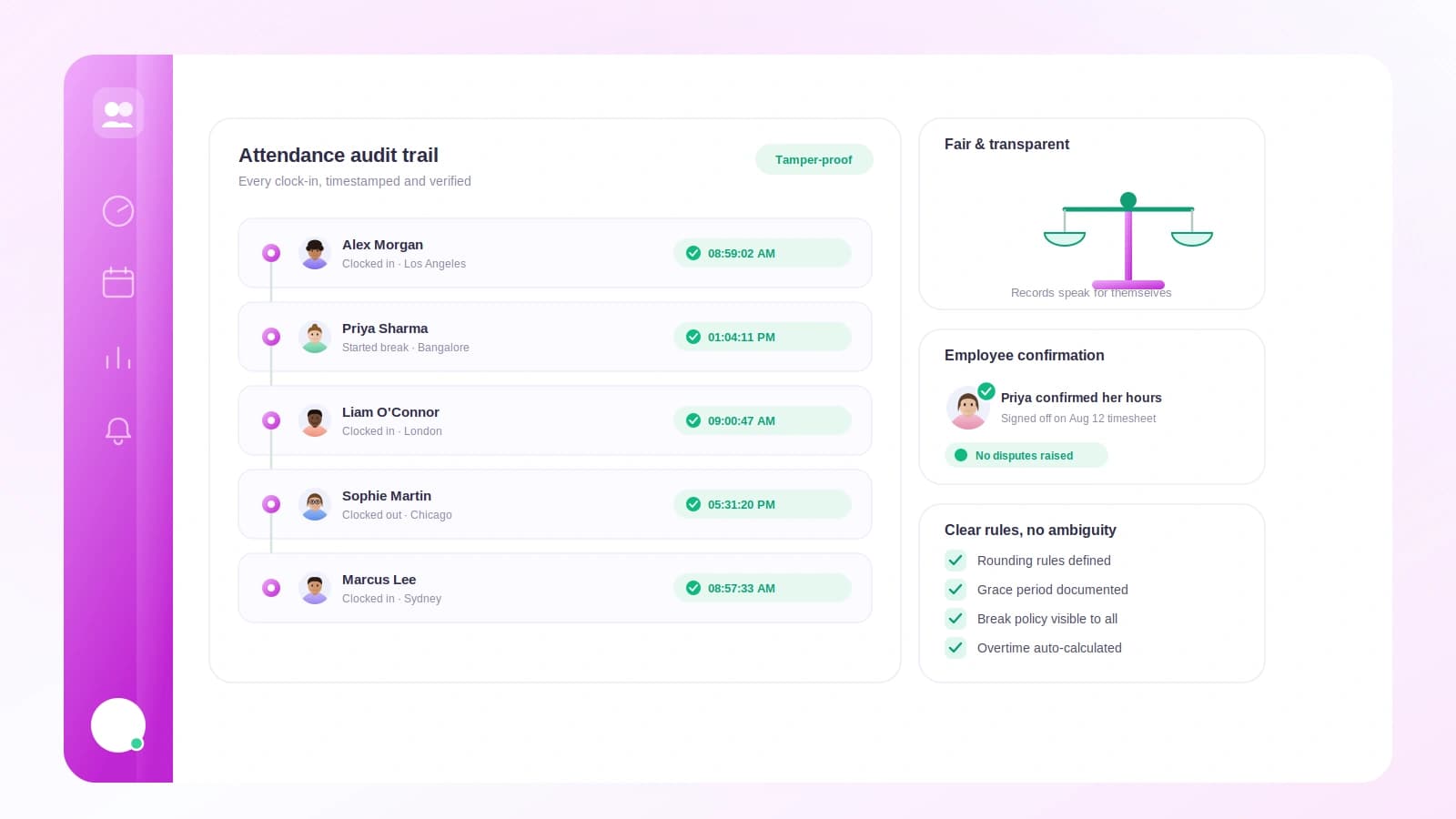
Ambiguity: without a record, an attendance conversation is one person's memory against another's. Memory is a poor referee, and it tends to favor whoever is more confident.
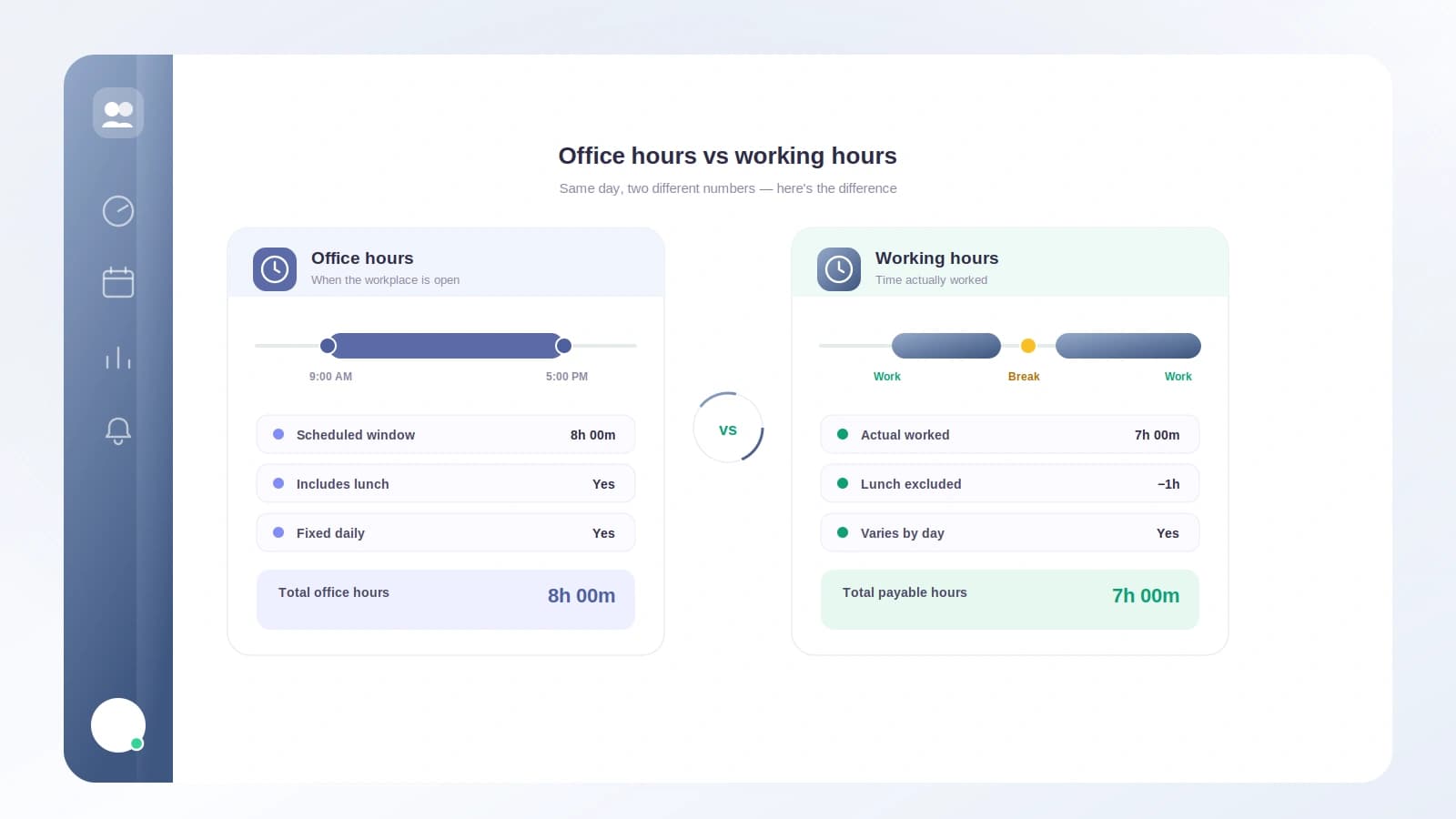
Remove it with an automatic record. Tickin tracks sessions, hours, and daily breakdowns as they happen, so there is an auditable history to point at instead of a recollection to defend. Pair that with a clear note on pay math: your daily working hours (the payable value, set to Auto or Manual, for example 8 hours with an unpaid lunch) is separate from the office window, and it is the number overtime, payroll, and monthly totals read. That keeps the pay side consistent too, so "hours present" and "hours paid" never quietly drift apart.
The takeaway
Treat disputes as a clarity problem, not a character problem. Write the rules down once: office hours, a grace number, one workspace timezone, and your working days. Let the automatic record carry the memory. When everyone can see the same rules and the same numbers, most disagreements never reach you, and the ones that do are settled in a minute, not a meeting.